

Our Mission
Turning local knowledge into climate resilience.
We connect local knowledge, scientific evidence and finance to help communities and institutions anticipate and respond to climate risk.
Our principles
Our work starts with mountain communities and is guided by their priorities. We work in service of locally defined needs, bringing together community knowledge, scientific evidence and institutional support to strengthen climate resilience.


Evidence integrated
Connect local observation with science and environmental data.
Decision focused
Turn evidence into better adaptation, risk and investment decisions.
Locally grounded
Start with community knowledge and priorities.

Our Team
Third Pole Climate Nexus brings together expertise in climate policy, science, community knowledge and mountain resilience.
Carole Fuchs, PhD.
Carole Fuchs is Co-founder and Programme Lead of Third Pole Climate Nexus. She is currently Executive Director of the organisation. Her career spans climate diplomacy, renewable energy, sustainable finance and environmental policy across Asia. She combines policy and investment experience with field research in the Himalayas, where her work focuses on climate risk, community knowledge and practical pathways to resilience.
Experience
Executive Director & Programme Lead — Third Pole Climate Nexus
Leads strategy, partnerships and programme development, connecting communities, researchers, public institutions and funders around climate resilience in the Himalayas. Core Group member of Working Group 2, Actionable Cryosphere Projections, under the United Nations Decade of Action for Cryospheric Sciences (2025–2034), contributing to work on cryosphere modelling for decision-making.


Climate & Energy Policy — UK Foreign, Commonwealth & Development Office
In 2025–26, travelled 1,400 kilometres across Nepal’s Great Himalaya Trail, documenting how climate and environmental change are reshaping mountain communities, ecosystems and risk.
Renewable Energy & Project Development — Asia
Until 2025, led climate and energy cooperation with Japan from the British Embassy in Tokyo, working across government, business and finance on the energy transition, industrial decarbonisation and international climate partnerships.
Himalayan Field Research
Worked on renewable-energy investment and project development across Asia, including the legal and commercial structuring of solar projects and cross-border energy investments.
Binaya Raj Shivakoti, PhD.
Dr. Binaya Raj Shivakoti is a climate adaptation and water specialist with more than 18 years of experience across Asia. His work spans locally led adaptation, water-resource management, disaster risk reduction and the integration of Indigenous, traditional and local knowledge into climate action.
Experience
Institute for Global Environmental Strategies (IGES)
Based at IGES since 2010, Binaya currently leads work on locally led adaptation, combining policy research, community engagement and capacity building to strengthen the resilience of livelihoods and socio-ecological systems across Asia.


Climate Adaptation & Water
He served as a Coordinating Lead Author for both the sixth and seventh editions of the UN Environment Programme’s Global Environment Outlook (GEO-6 and GEO-7).
Indigenous & Local Knowledge
His work covers water-resource management, disaster-risk planning, river-basin approaches and climate adaptation, with experience ranging from community-level action to regional and national policy.
Global Environmental Assessment
Binaya works extensively on bringing Indigenous, traditional and local knowledge into adaptation planning and decision-making, using participatory approaches alongside scientific and technical evidence.
Rupak Koirala
Rupak Koirala, our Strategic Partnership Lead, is an environmental and sustainable-tourism specialist with more than 10 years of experience in Nepal. His work spans sustainable tourism, climate adaptation, biodiversity conservation and renewable energy, with a strong focus on locally grounded approaches to resilient development.
Experience
Sustainable Tourism & Destination Management
Rupak works on sustainable destination development, community engagement and climate-resilient tourism in Nepal. He currently serves as Nepal Country Representative for Green Destinations.


Climate Adaptation & Biodiversity
Rupak has worked with the Ministry of Agricultural Development, the World Bank, the Jane Goodall Institute Nepal, UNDP and research organisations in Nepal.
His work has included climate adaptation, biodiversity conservation and community-based environmental initiatives, connecting local priorities with wider sustainability and resilience goals.
Government & International Development
He is a Global Exchange in Leadership Initiatives (GEILI) Fellow and has undertaken international training through UNITAR, The Climate Reality Project and other organisations. At Third Pole Climate Nexus, Rupak leads programme development and partnerships in Nepal, with a particular focus on sustainable tourism, community engagement and resilient mountain livelihoods.
Leadership & International Training
Rahul G. Rajkarnikar
Rahul G. Rajkarnikar is a climate researcher and project coordinator with a background in environmental engineering and environmental management. His work focuses on high-altitude climate risk, water resources, disaster resilience and community-based environmental monitoring across the Himalayas.
Experience
UNESCO Chair in Mountain Cryosphere and Water
Rahul serves as Executive Secretary for the UNESCO Chair in Mountain Cryosphere and Water, supporting research, coordination and partnerships focused on cryosphere change, mountain water systems and climate resilience.


Climate Data & High-Altitude Monitoring
Rahul works on approaches that mobilise local communities and citizen science to generate environmental observations, connect local knowledge with scientific monitoring and strengthen long-term climate data systems.
Citizen Science & Community Monitoring
His work addresses critical climate-observation gaps in remote mountain regions, with a focus on strengthening the evidence needed to understand changing hydrological and cryosphere conditions.
His work includes integrated water-resources management and disaster-risk reduction, with particular attention to the links between changing climate conditions, water security and high-altitude hazards.
Water & Disaster Risk Reduction
We work with mountain communities as partners in research, recognising that meaningful participation involves more than consultation. Local knowledge, values and priorities should help shape the questions being asked, the evidence being gathered and the decisions that follow. Our work therefore seeks to bring community knowledge and scientific research into dialogue, while supporting the agency of local knowledge holders throughout the research process.
Our Community Network

New Projects
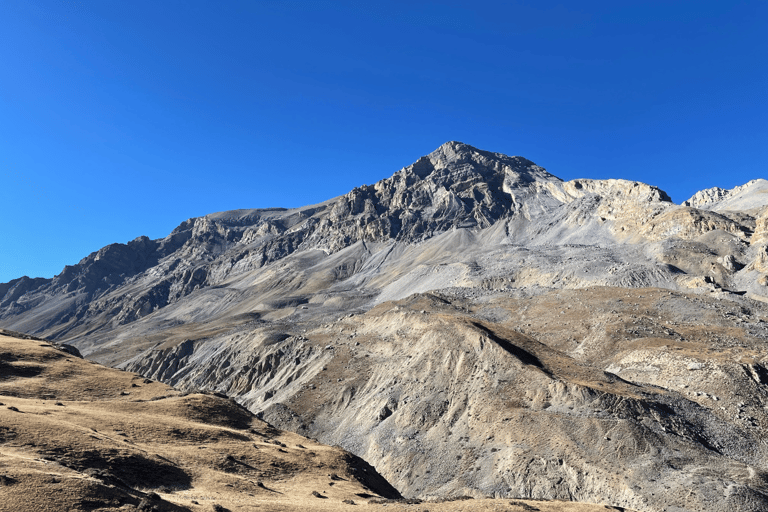
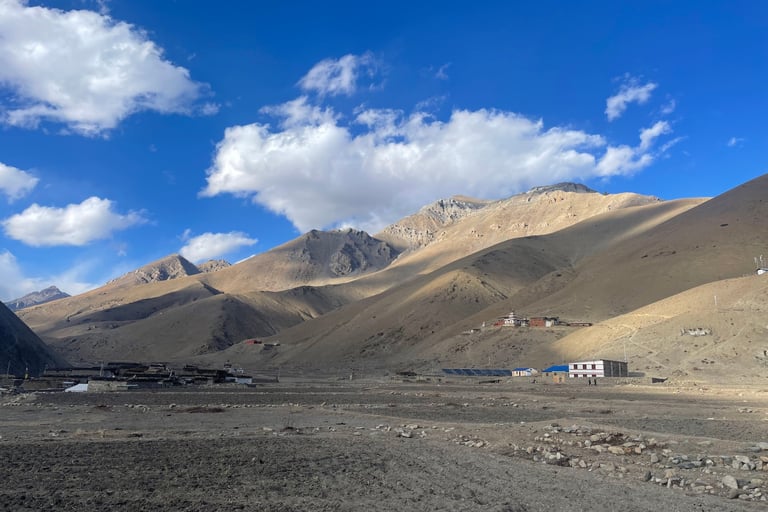
This pilot programme is being developed in Upper Dolpa, Nepal, to improve how high-altitude rangelands are monitored and managed. It brings Indigenous and local pastoral knowledge together with scientific methods and Earth observation to produce a fuller and more locally meaningful understanding of environmental change.
Working with pastoral communities, the project will co-develop indicators based on pasture and snow conditions, seasonal calendars, herd movements and local decision-making. These observations will be translated into structured, geo-referenced data that can be compared with satellite products and future rangeland models.
The programme will also develop an offline-capable data-collection workflow, an interactive dashboard and training for local observers. Its aim is to strengthen community participation in monitoring, improve the interpretation of Earth observation data and support climate-resilient rangeland governance.
The project is being developed by the Third Pole Climate Nexus in collaboration with research institutes in Kathmandu and NAXA, which provides technical expertise in offline data collection, geospatial systems and Earth observation integration. Local pastoral communities in Upper Dolpa are central knowledge partners and co-designers of the monitoring approach.
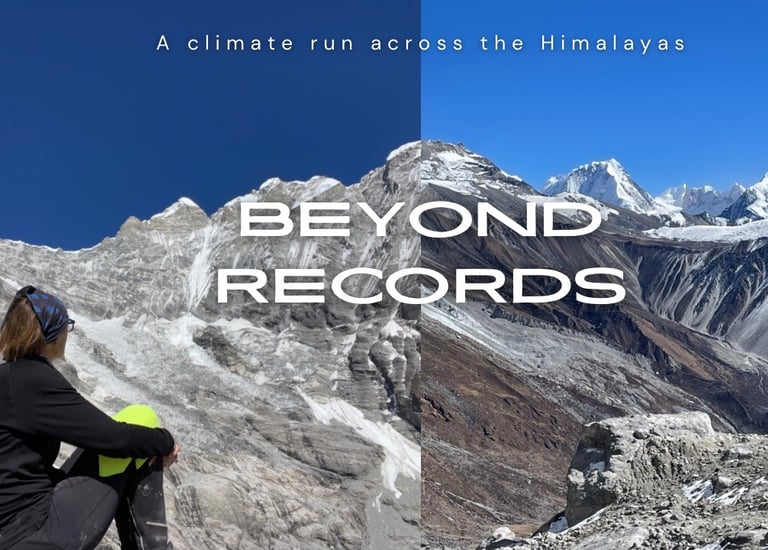


Climate documentary
Beyond Records is a community-engaged research and documentary initiative examining the social and ecological consequences of climate change across the Nepal Himalaya. Developed through a 1,600-kilometre journey along the Great Himalaya Trail, the project investigates how glacier retreat, water insecurity and ecosystem change are affecting livelihoods, cultural relationships with landscapes and local approaches to adaptation.
The work combines ethnographic field research, semi-structured interviews, participant observation, visual documentation and engagement with scientific experts and local partners. It brings community knowledge and lived experience into dialogue with research on cryosphere change, biodiversity, water systems and climate risk.
A central focus is how mountain communities interpret environmental change, identify priorities and develop locally grounded responses. The project also examines how their knowledge and perspectives can contribute more meaningfully to climate and biodiversity policy, rather than being treated only as evidence collected by outside researchers.
The documentary is one output of this wider programme of research, public engagement and policy communication. It translates field evidence and scientific findings into an accessible narrative for policymakers, researchers and wider audiences. The pilot has been recognised through the United Nations’ 2025 International Year of Glaciers’ Preservation and screened in international policy dialogues.
Status: Ongoing research, community engagement and documentary production.
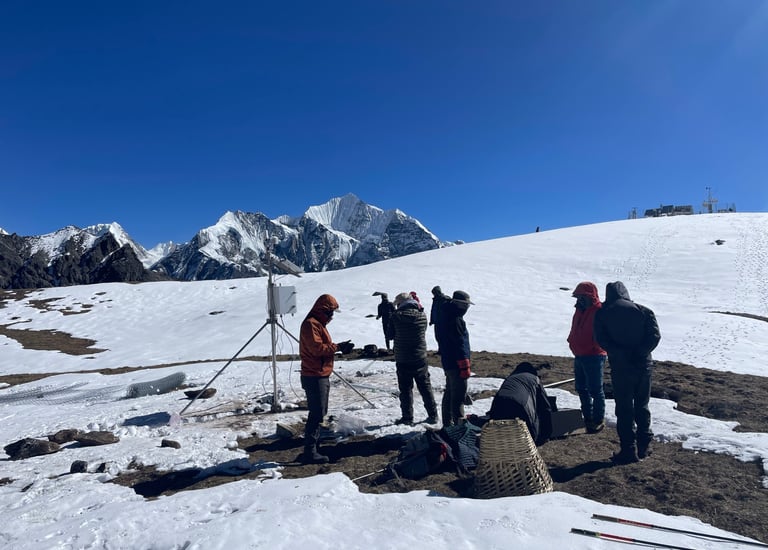
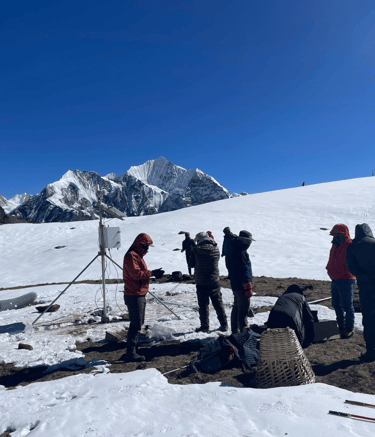
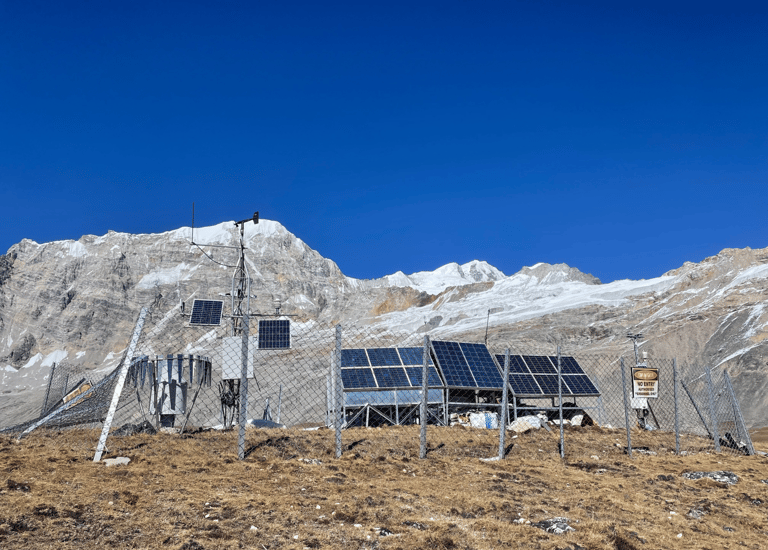
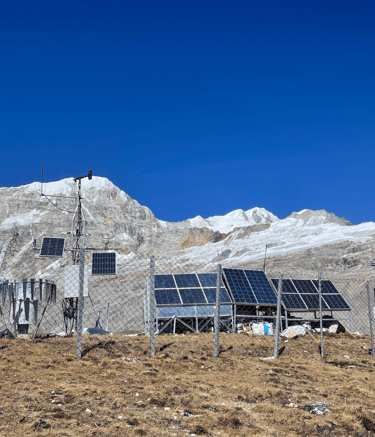
PILOT-PROGRAMME: Co-Producing Himalayan Rangeland Monitoring with Community Knowledge


Partners & Collaborators
The Third Pole Climate Nexus works closely with local and regional organisations and institutions to strengthen our initiatives and maximise impact. We are proud to collaborate with partners such as Trees Nepal, supporting local environmental and community projects, Small Earth Nepal, and the International Centre for Integrated Mountain Development (ICIMOD), advancing regional climate research and adaptation strategies.
Through these collaborations, we ensure that our work is grounded in local expertise, informed by scientific knowledge, and aligned with policy and adaptation priorities across the Himalayas.


Offices
France
Saint-Avold, Moselle
Nepal
Kathmandu, Dilibazar, Kathmandu
Japan
Kashiwagi, Hara, Nagano
CONTACT
© 2025 Third Pole Climate Nexus – Non-profit organisation registered under French law (Loi 1901)


General enquiries/partnerships: carole@thirdpoleclimatenexus.org
Turning knowledge into climate resilience.